A Global Challenge: Modeling the Effect of Nuclear Weapons on Climate and the Effect of Climate on Nuclear Weapons
This webinar, recorded on September 22, 2023, focuses on how the deployment of nuclear weapons would create disastrous effects on climate. In turn, climate change not only increases the likelihood of war due to competition for resources (water, air, soil)
and therefore increased violence on a warming planet, but also is directly affecting vulnerable nuclear weapons sites and legacy nuclear waste from weapons development, with disproportionate health effects on local populations.
Faculty
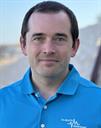
Caleb Dresser, MD, MPH
Climate MD Program Lead, Center for Climate, Health, and the Global Environment
Harvard T.H. Chan School of Public Health
Caleb leads the Climate MD program at the Center for Climate, Health, and the Global Environment at Harvard T.H. Chan School of Public Health, which works with frontline health clinics to prepare
a climate-ready healthcare workforce. He is also the Assistant Director of the Climate & Human Health Fellowship for physicians, an emergency medicine physician at Beth Israel Deaconess Medical Center, and an Instructor in Emergency Medicine at Harvard
Medical School.
Caleb’s current work focuses on the means to address health needs during and after climate-related disasters. He is currently exploring the hazards posed by extreme heat events and weather-related electrical outages for patients
in communities near Boston, including the threat that these can pose to patients with specific medical vulnerabilities. He is also examining the long-term health impacts of hurricanes and other climate-related disasters, including issues of prolonged
loss of access to medical services and temporary and permanent migration of affected populations.
Caleb has experience with bench, clinical, and operational research in a variety of settings, is former Uganda Program Director for the nonprofit
Global Emergency Care, and recently completed his residency in Emergency Medicine at Beth Israel Deaconess Medical Center. He is currently a practicing Emergency Medicine physician with Harvard Medical Faculty Physicians at Beth Israel Deaconess Medical
Center.
Caleb received his BS from Cornell University, his MD from the University of Massachusetts Medical School, and his Master of Public Health at the Harvard T. H. Chan School of Public Health. He is a graduate of the Harvard Affiliated Emergency
Medicine Residency at Beth Israel Deaconess Medical Center.
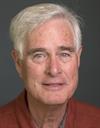
Brian Toon, PhD
Professor, Department of Atmospheric and Oceanic Sciences
Research Scientist, Laboratory for Atmospheric and Space Physics
University of Colorado, Boulder
Brian Toon is a professor in the Department
of Atmospheric and Oceanic Sciences, and a research associate at the Laboratory for Atmospheric and Space Physics, at the University of Colorado, Boulder. He leads a research group that studies aerosols and cloud physics and investigates climate and
atmospheric chemistry on Earth and other planetary bodies.
Dr. Toon received an AB in physicians from the University of California-Berkeley and earned his PhD in physics from Cornell University. He is a fellow of the American Meteorological
Society, the American Geophysical Union and the American Association for the Advancement of Science and is the recipient of several awards and honors including the 2011 Roger Revelle Medal from the American Geophysical Union.

Matt Korda
Senior Research Associate and
Project Manager, Nuclear Information Project
Federation of American Scientists
Matt Korda is a Senior Research Associate and Project Manager for the Nuclear Information Project at the Federation of American Scientists, where he co-authors the Nuclear Notebook––an authoritative open-source estimate of global nuclear forces and trends.
Matt is also an Associate Researcher with the Weapons of Mass Destruction Programme at the Stockholm International Peace Research Institute (SIPRI), and co-authors the nuclear weapons chapters for the annual SIPRI Yearbook. Previously, he worked for
the Arms Control, Disarmament, and WMD Non-Proliferation Centre at NATO HQ in Brussels. Matt is also the co-director of Foreign Policy Generation––a group of young people working to develop a progressive foreign policy for the next generation.
He
received his MA in International Peace & Security from the Department of War Studies at King’s College London, where he subsequently worked as a Research Assistant on nuclear deterrence and strategic stability. He also completed an internship with
the Verification, Training and Information Centre (VERTIC) in London, where he focused on nuclear security and safeguards. He received a BA in European Studies from Victoria College at the University of Toronto.
Matt’s research interests and recent
publications focus on nuclear deterrence and disarmament, progressive foreign policy, and the nexus between nuclear weapons, climate change, and injustice. Matt’s work has been widely published and quoted in The New York Times, The Washington Post,
BBC, Associated Press, The Toronto Star, Forbes, CBC, Politico, The Nation, Bulletin of the Atomic Scientists, Defense One, Inkstick, Outrider, 38 North, Arms Control Wonk, and others.
Matt is a listed Expert member of the Forum on the Arms Trade
program and a Member of the Canadian Pugwash Group. He was also the Ploughshares Fund’s 2020 Olum Fellow, a 2019 alumnus of the Wilson Center’s Nuclear History Boot Camp, a 2019 CSIS Nuclear Scholar, and a 2018 alumnus of IGCC’s Public Policy and
Nuclear Threats Boot Camp.
Current Work: Tracking global nuclear forces (published bi-monthly in FAS’ Nuclear Notebook and annually in the SIPRI Yearbook); comprehensive study on the United States’ intercontinental ballistic missile force (ICBM
Information Project); progressive foreign policy (Foreign Policy Generation).
Moderators

Brita E. Lundberg,
MD
Chair, Board of Directors
Greater Boston Physicians for Social Responsibility
Dr. Brita Lundberg is the chair of Greater Boston Physicians for Social Responsibility and the CEO and founder of Lundberg Health Advocates, LLC, a patient advocacy group. Trained in infectious diseases, she is active in the medical community as a member
of the Massachusetts Medical Society (MMS)’s Occupational and Environmental Health Committee; as a Delegate to MMS for the Charles River District; as a member of Climate Code Blue, a physician advocacy group on climate issues; and as a Board member
of the COVID-19 Action Coalition.
Her primary area of interest is the human health effect of fossil fuels and their role as a driver of climate change. With Greater Boston PSR, MMS and many other groups, she helped organize a large forum on the Health Impacts of Natural Gas Infrastructure
at the Boston University School of Public Health in January 2018. She has successfully won passage of policies around climate change, fossil fuel pollution and human health at the MMS; and has co-authored several reports with other Greater Boston
PSR members on the flawed health impact assessment of the Weymouth compressor station. Dr. Lundberg completed her undergraduate education at Harvard University, medical school and residency at the University of Wisconsin-Madison, and Fellowship in
Infectious Diseases at University of Colorado. She was formerly on faculty at the Emory School of Medicine as an Assistant Professor in the Division of Infectious Diseases.

Wynne Armand, MD
Associate Director
Massachusetts General Hospital Center for the Environment and Health
Wynne Armand, MD is an associate director of the MGH Center for the Environment and Health, assistant professor at Harvard Medical School, and board certified in Internal Medicine.
Prior to coming to MGH, she received her medical degree at University of California at San Francisco (UCSF), where she also received her residency training in a program focused on providing care to the underserved.
Dr. Armand practices primary care at MGH Chelsea HealthCare Center, where she provides comprehensive preventive care, chronic disease management and urgent care to adult patients in a diverse, urban setting.
As an associate director of the MGH Center for the Environment and Health, she works towards integrating environmental sustainability into hospital activities and health care.
Dr. Armand also serves as a faculty editor for Primary Care Office Insite (PCOI), a knowledge resource that guides day-to-day clinical practice for primary care teams at MGH and across Mass General Brigham.
Intended Audience
This webinar is designed for physicians, physicians-in-training, other health care leaders and professionals, students, and members of the community.
Course Objectives
Upon completion of this activity, learners should be able to:
- Explain the overlaps between climate change and nuclear war and the concerning health effects of climate change on legacy and current nuclear weapons development
Course Fees
Massachusetts Medical Society (MMS) Physician Member: $20.00
MMS Resident/Student Member: Free
Non-Member Physician: $45.00
Non-Members Resident/Student: $10.00
Allied Health Professional/Other: $16.00
Format & Estimated Time to Complete
Video recording/1 hour
Accreditation and Credit Information
Accreditation Statement
This activity has been planned and implemented in accordance with the accreditation requirements and policies of the Accreditation Council for Continuing
Medical Education (ACCME) through the joint providership of the Massachusetts Medical Society and Greater Boston Physicians for Social Responsibility. The Massachusetts Medical Society is accredited by the ACCME to provide continuing medical education
for physicians.
AMA Credit Designation Statement
The Massachusetts Medical Society designates this enduring material for a maximum of 1.00 AMA PRA Category 1
Credit™. Physicians should claim only the credit commensurate with the extent of their participation in the activity.
National Commission on Certification of Physician Assistants (NCCPA)
Physician Assistants may claim a maximum of 1.00 Category 1 credits for completing this activity. NCCPA accepts AMA PRA
Category 1 Credit™ from organizations accredited by ACCME or a recognized state medical society.
This activity meets the criteria for the Massachusetts Board of Registration in Medicine for risk management study.
Exam/Assessment: A score of 70% or higher is required to receive AMA PRA Category 1 Credit™.
Activity Term
Original Release Date: September XX, 2023
Review Date (s): N/A
Termination Date: September XX, 2024
System Requirements
Desktops/Laptops
Windows 10
Mac OSX 10.6 higher
Most modern browsers including:
IE 11+
Firefox 18.0+
Chrome latest version
Safari 12+
Mobile/Tablet
iOS devices beginning with OS version 10 or higher (includes, iPhone, ipad and iTouch devices)
