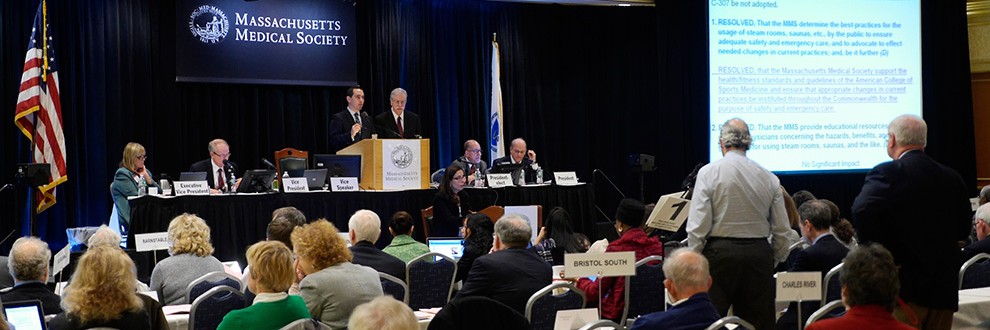
Over the past decade, the Massachusetts Medical Society (MMS) has undertaken a comprehensive, multi-phase governance reform initiative to modernize its organizational structure, improve efficiency, and ensure governance supports both the Society’s strategic
goals and the evolving needs of physicians and medical students.
This work responds to shifts in member engagement, changes in the health care and association landscape, and the need for a governance model that is nimble, inclusive, and competency-based.
Early Strategic Assessment (FY 2015–2016)
The Committee on Strategic Planning reviewed governance best practices among peer organizations, highlighting trends such as competency-based board composition, reduced emphasis on geographic representation, and the need for stronger engagement of younger
and employed physicians.
Task Force on Governance (FY 2017–2019)
A Task Force on Governance, representing diverse member perspectives, developed foundational principles to guide reform. Core recommendations included allowing MMS membership independent of district membership, affirming the Board of Trustees' fiduciary
authority, and supporting a representative and accountable board with essential competencies. The recommended board size of 9–19 members and the emphasis on aligning governance with the MMS strategic plan positioned reform as a key strategic priority.
Governance Reform Summits (FY 2020)
Three governance reform summits convened MMS, district, and committee leaders to evaluate existing governance structures and explore future organizational models, building early consensus around a smaller, more competency-based Board and streamlined governance
processes; this work paused during the COVID-19 pandemic.
Governance Reform Working Group (FY 2021–Present)
Formed under Resolution I-20 C-301, the Governance Reform Working Group (GRWG) has led a comprehensive and transparent evaluation of MMS governance, providing regular updates to the House of Delegates and engaging members through forums and listening
sessions.
Between 2022 and 2025, the House of Delegates adopted multiple GRWG and Committee on Bylaws reports addressing trustee elections, district leadership, officer roles, committee structure, and regional definitions for trustee positions, including the 2023
decision to establish the District Leadership Council as a standing committee. A key efficiency improvement was the 2025 adoption of a ten-year policy sunset review cycle, reducing procedural burden on committees.
While some proposed structural changes — such as significant revisions to trustee configuration — were ultimately not adopted, the reform process resulted in meaningful modernization of key governance components and reaffirmed member commitment to balanced
representation and effective leadership.
Ongoing Work
Governance reform remains an active and iterative process. The Medical Society continues to advance the mandate of Resolution I-20 C-301, focusing on governance effectiveness, organizational structure, and alignment with MMS strategic priorities. Additional
recommendations will be brought forward as this work continues.
